

Ray-Bar Glossary and Terminology
This glossary is provided as a guide to understanding commonly used terms for ratings, labeling, permanent markings and applications across Ray-Bar's product lines: Radiation Shielding, Fire-Rated Glass, Ballistic & Bullet Resistant, and Antimicrobial products.
General & Regulatory Terms
AHJ (Authority Having Jurisdiction): Includes code officials such as the project Inspector of Record, Building Official, or Fire Marshall. Has authority to define codes and make final determinations of building, fire, radiation, and life-safety code compliance for a given project.
ASTM (American Society for Testing and Materials): A standards organization that develops and publishes technical test standards used to evaluate the performance of materials, products and assemblies — including glass, radiation shielding, and building products.
Assembly: A complete tested system — such as a door, window, or wall — including all component parts (frame, glazing, hardware, seals) evaluated and labeled together as a single rated unit. A component may only carry the rating of the tested assembly it is installed within.
UL (Underwriters Laboratories): An independent testing and certification laboratory. Many Ray-Bar products are tested and labeled to UL standards, including UL 263 (fire resistance) and UL 752 (bullet resistance).
Radiation Shielding Terminology
Attenuation: The reduction in intensity of X-ray, gamma, or neutron radiation as it passes through a shielding material such as lead, lead glass, or lead-lined drywall. Attenuation increases with material thickness and density.
See Ray-Bar's X-Ray Lead Glass and Lead Sheet, Plate, Brick Shielding products.
Fluoroscopy Room: A radiology room used for real-time X-ray imaging, typically requiring higher shielding levels due to longer exposure times and scatter radiation.
See Ray-Bar's Fluoroscopy Rooms shielding guide.
HVL (Half-Value Layer): The thickness of a specific shielding material (such as lead) required to reduce radiation intensity to one-half of its original value. Used by physicists to calculate required lead equivalency for a room or barrier.
See Ray-Bar's Shielding Considerations resource.
Integral Mini Blind IGU: An insulated glass unit (IGU) with a mini-blind sealed between the lites, commonly used with lead glass in radiology and control room windows to provide privacy and light control without breaching the shielding barrier.
See Ray-Bar's Integral Mini Blind IGU products.
Lead-Backed / Lead-Lined: A product — such as drywall, plywood, or a door — that has a sheet of lead laminated or bonded to it (or built into its core) to provide radiation shielding while allowing standard finishing and installation methods.
See Ray-Bar's Lead Lined Sheetrock, Lead Backed Plywood, Lead Lined Wood Doors, and Lead Lined Hollow Metal Doors.
Lead Equivalency (Lead Equivalent Thickness): The shielding performance of a non-lead material expressed as the thickness of pure lead that would provide equal radiation attenuation. Lead glass, lead acrylic, and leaded barriers are all rated in lead-equivalent millimeters (mm Pb).
See Ray-Bar's Lead Thickness Chart and X-Ray Glass Specs.
Lead Glass: A specialty glass containing lead oxide, used in radiology, dental, veterinary, and industrial settings to shield operators and the public from scatter radiation while maintaining visibility into the exam or procedure room.
See Ray-Bar's X-Ray Lead Glass and X-Ray Safety Lead Glass products.
Lead Vinyl: A flexible sheet material impregnated with lead, used for shielding curtains, aprons, retrofit wall applications, and other areas requiring a flexible or non-rigid radiation barrier.
See Ray-Bar's Lead Vinyl, Flexible Shielding products.
Neutron Shielding: Shielding specifically engineered to attenuate neutron radiation, typically required in linear accelerator vaults, proton beam rooms, and certain research applications. Neutron shielding materials differ from standard lead-based gamma/X-ray shielding and often incorporate hydrogenous or borated materials.
See Ray-Bar's Neutron Shielding Products and Neutron Shielded Doors.
Radiation Safety Officer (RSO): The individual designated by a facility to oversee compliance with radiation safety regulations, including specifying required shielding thicknesses for rooms housing radiation-producing equipment.
Retrofit Shielding: Shielding products designed to be added to an existing wall, room, or structure without full demolition, allowing radiation protection to be installed or upgraded in occupied facilities with minimal disruption.
See Ray-Bar's Retrofit Shielding Products and Pre-Finished Modular Retrofit Shielding Panels.
Scatter Radiation: Radiation that deflects off a patient, object, or surface during an X-ray exposure, traveling in directions other than the primary beam. Shielding must account for both primary beam and scatter radiation exposure.
Shielded Wall System: A complete wall assembly incorporating lead-lined drywall, plywood, or panels engineered to provide continuous radiation shielding across a room boundary, including accessories to maintain shielding integrity at seams, corners, and penetrations.
See Ray-Bar's X-Ray Wall Products and Wall Products Specs.
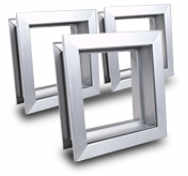
X-Ray Control Window (Telescopic Window): A lead-lined window frame system installed in a wall to allow visual observation into a radiation-producing room while maintaining the shielding integrity of the wall assembly.
See Ray-Bar's Lead Lined Windows for Walls and Lead Lined Vision Frames for Doors.
Fire-Rated Glass Terminology
Annealed Glass: Standard glass that has been heat processed to equalize stress tension. This glass easily breaks into sharp jagged shards and does not comply with any safety glass requirements.
Clear Ceramic Glass: Not glass in the classic sense, but a clear ceramic glazing material that can be continuously exposed to high temperatures with virtually no thermal expansion or contraction, and is impervious to thermal shock.
See Ray-Bar's FireLite® Ceramic Glass products.
Fire Glazing Tape: Specialized fire glass tape tested and approved for use in fire-rated window and door assemblies, often intumescent, to seal gaps between glazing and frame components.
Fire Protective: Protects as a barrier against fire, flames, and smoke to a specific standard and time duration, but is not a barrier to heat transfer.
See Ray-Bar's FireLite® Ceramic Glass and WireLite® Safety Glass products.
Fire Rated: A product, material or assembly that has been tested and certified to a specific fire protective or fire resistive performance standard, usually measured in minutes for fire, smoke, or heat transfer. Must be tested by an independent lab and properly, permanently labeled to be considered "Rated" per building and safety codes.
See Ray-Bar's Fire-Rated Glass Products.
Fire Resistive: Protects as a barrier against fire, flames, smoke, and thermal conductive and radiant heat transfer to a specific standard and time duration, meeting wall assembly criteria test standards ASTM E-119 and UL 263.
See Ray-Bar's Pyrostop® Multi-Lami Glass products.
Float Glass: Glass manufactured by pouring molten liquid glass onto a metal surface (usually tin) and cooling it, leaving a level, flat sheet. This process allows highly efficient, continuous, high-volume glass production.
Hazardous Location: As defined by International Building Code IBC 2406 "Safety Glazing," any glazing occurring in a door, or in a wall within 24" of a door opening, which requires impact-resistant safety glazing.
See Ray-Bar's FireLite® Ceramic Glass, WireLite® Safety Glass, and Pyrostop® Multi-Lami Glass products for hazardous locations.
Hose Stream Test: A required second phase of fire testing for all fire glass assemblies rated over 20 minutes (45, 60, 90, 120 minutes or more), simulating firefighting hose stream impact, erosion, and thermal shock. Part of UL 10B fire testing standards.
See Ray-Bar's FireLite® Ceramic Glass, WireLite® Safety Glass, and Pyrostop® Multi-Lami Glass products, all of which pass Hose Stream test requirements.
Impact Resistant: Fire safety glass that meets IBC 2406 "Safety Glazing" requirements for hazardous locations, tested and permanently labeled as meeting ANSI Z97.1 and CPSC 16 CFR 1201 Cat I and II.
See Ray-Bar's Impact Resistant Fire Rated Safety Glass products for hazardous locations.
Intumescent: A compound or material that expands and swells when exposed to heat, sealing gaps between components in fire-rated assemblies.
Laminated Glass: Two panes of glass with a clear plastic (PVB or PVA) layer bonded between them to retain the sheet together upon impact and breakage, often used for added safety or forced-entry security. Must be tested and permanently labeled to meet ANSI Z97.1 and CPSC 16 CFR 1201 Cat I and II.
See Ray-Bar's Pyrostop® Multi-Lami Glass products.
Low Iron Glass: Glass containing very little iron, resulting in very clear, colorless appearance. Standard iron- or copper-containing glass has a faint bluish or greenish hue.
Monolithic Glass: A single-layer thickness of solid glass sheet or plate, as float, rolled, or cast glass.
See Ray-Bar's FireLite® Ceramic Glass products.
Multi-Laminated Glass: Three or more panes of glass with clear plastic or intumescent layers bonded between them to withstand a higher level of impact and breakage. Used in fire-resistive glazing and bullet-resistant glazing assemblies.
See Ray-Bar's Pyrostop® Multi-Lami Glass and Bullet Resistant Glass products.
Positive Pressure Test: Part of a fire door assembly test that simulates real fire environments, where air is heat-expanded, pressurized, and consumed by the fire. Intumescent glazing tape is typically used to seal gaps in the assembly.
Safety Filmed Glass: A clear film bonded to one face of a glass pane to provide impact resistance, retaining the sheet together upon impact and breakage. Must be tested and permanently labeled to meet ANSI Z97.1 and CPSC 16 CFR 1201 Cat I and II.
See Ray-Bar's WireLite® Safety Glass products.
Temperature Rise: An International Building Code requirement for fire doors in interior stairways, exit passageways, and ramps, limiting maximum temperature rise on the non-fire side of a 60- or 90-minute rated door to 450°F above ambient for a 30-minute period (IBC 716.2.2.3 and predecessor sections).
See Ray-Bar's Fire-Rated Doors and Pyrostop® Multi-Lami Glass products.
Tempered Glass: Glass strengthened by a chemical (salt) or thermal (oven) process, from 4x up to 7x stronger than annealed glass of the same thickness. When broken, it fractures into small granular pieces rather than sharp shards, and is accepted as "safety glass" when properly tested and labeled.
Thermal Shock: A sudden temperature change causing glass to rapidly expand or contract, releasing thermal stress by cracking, breaking, or bursting — for example, when fire-heated glass is suddenly cooled by sprinkler or hose stream water. Clear ceramic glass is practically impervious to thermal shock.
See Ray-Bar's FireLite® Ceramic Glass products.
Wired Glass: Glass with an internal wire grid, typically in a diamond pattern. Considered unsafe and hazardous unless it is safety filmed or laminated.
See Ray-Bar's WireLite® Safety Glass products, meeting ANSI Z97.1 and CPSC 16 CFR 1201 Cat I and II and compliant with IBC 2406.
Ballistic & Bullet Resistant Terminology
Ballistic Fiberglass: A rigid composite material made of layered fiberglass, used in bullet-resistant wall panels and doors to stop projectiles while adding minimal weight compared to steel.
See Ray-Bar's Ballistic Wall Panels and Ballistic Doors.
Ballistic Level (Bullet Resistant Level): A classification indicating the tested threat a material or assembly can withstand, ranging from handgun-level threats (e.g., UL 752 Level 1–3) to high-powered rifle threats (e.g., UL 752 Level 4–8). Higher levels indicate resistance to larger caliber, higher-velocity projectiles.
See Ray-Bar's Bullet Resistant Glass Handgun Level 3, Bullet Resistant Glass Rifle Level 8, and Ratings of Bullet Resistant Materials.
Bullet Resistant Glass (Ballistic Glass): A multi-laminated glass or glass-clad polycarbonate assembly engineered and tested to stop or resist penetration by bullets at a specified threat level, while maintaining visibility. Tested to UL 752, the Standard for Bullet-Resisting Equipment.
See Ray-Bar's Bullet Resistant Glass | UL 752 products.
Fire-Rated Bullet Resistant Glass: A glazing assembly engineered and tested to meet both fire-rating requirements and bullet-resistant ratings in a single glazing product, used where code requires both life-safety fire protection and security.
See Ray-Bar's Fire-Rated Bullet Resistant Glass Level 3.
Forced Entry Resistant: A rating indicating a glazing or door assembly's resistance to physical break-in attempts using tools, blunt force, or other manual methods, distinct from ballistic (firearm) resistance testing.
Glass-Clad Polycarbonate: A ballistic glazing material combining rigid glass outer layers with a polycarbonate core, offering high impact and bullet resistance with reduced weight compared to all-glass laminates.
NIJ Standard: A ballistic resistance testing standard published by the National Institute of Justice, commonly referenced alongside UL 752 for body armor and some architectural ballistic applications.
Spall / Spalling: Fragments of glass, metal, or backing material ejected from the rear (protected) side of a ballistic panel upon bullet impact, even when the round does not fully penetrate. Bullet-resistant assemblies are tested and rated for both penetration resistance and spall behavior.
Threat Level: The specific firearm, caliber, and ammunition type (or range of types) that a bullet-resistant product is tested against, forming the basis for its assigned ballistic rating.
UL 752 (Standard for Bullet-Resisting Equipment): The Underwriters Laboratories standard used to test and rate bullet-resistant glazing, doors, and wall panels against specified firearms, calibers, and shot counts. Ray-Bar's ballistic glass and assemblies are tested and labeled to UL 752.
See Ray-Bar's Bullet Resistant Glass | UL 752 and Ballistic & Bullet Resistant Products.
Antimicrobial Terminology
Antimicrobial Coating: A surface treatment or embedded additive applied to glass, frames, or hardware that inhibits the growth of bacteria, mold, and other microbes on the treated surface between cleanings.
See Ray-Bar's Antimicrobial Products.
Easy-Clean Glass: Glass manufactured or coated with a smooth, non-porous surface treatment that resists the buildup of grime, fingerprints, and microbes, making it easier to disinfect in clinical and high-touch environments.
See Ray-Bar's Easy-Clean X-Ray Glass.
EPA-Registered Antimicrobial: An antimicrobial additive or treatment that has been reviewed and registered with the U.S. Environmental Protection Agency for public health claims regarding its effectiveness against microbial growth.
High-Touch Surface: Any surface — such as a door handle, vision frame, or window barrier — that is frequently touched by multiple people, and therefore a priority location for antimicrobial treatment in healthcare and public facilities.
See Ray-Bar's X-Ray Control Barriers, Telescopic X-Ray Control View Window Frame, and Shielded Hollow Metal Doors with antimicrobial treatment.
ISO 22196 / JIS Z 2801: International and Japanese industrial test standards used to measure the antibacterial activity and effectiveness of treated plastic and hard, non-porous surfaces, commonly cited to substantiate antimicrobial product performance claims.
Silver Ion Technology: An antimicrobial technology using silver ions embedded in a coating or material surface to disrupt the cellular function of bacteria and inhibit their growth, commonly used in healthcare-grade finishes.
Have a term you'd like explained, or don't see something you're looking for? Contact Ray-Bar — our team is happy to help.
Contact Ray-Bar for all your Radiation, Fire and Ballistic protection needs.